
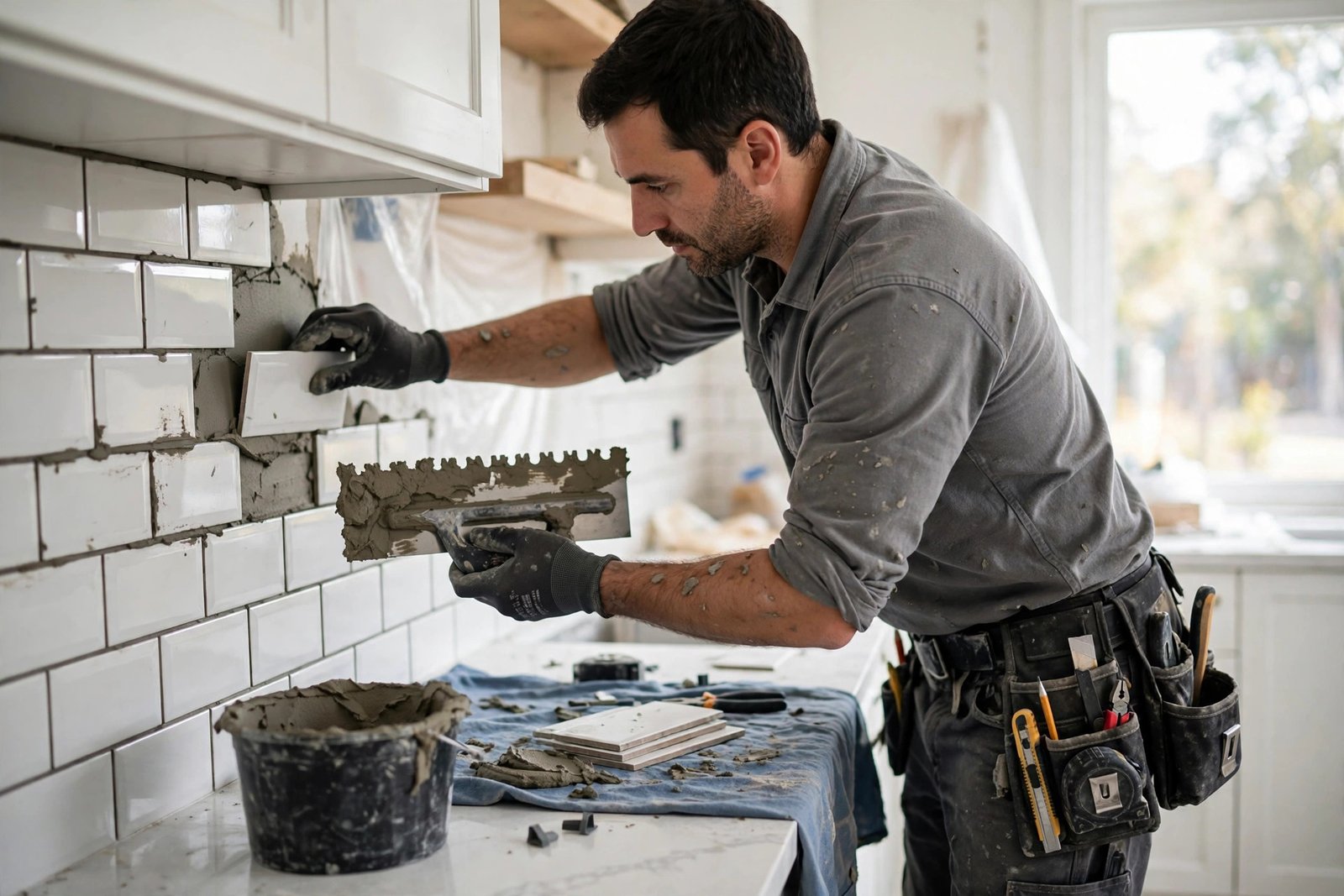
How Much Does It Cost to Tile a Kitchen Backsplash in 2026?
If you are wondering how much it costs to tile a kitchen backsplash, here is the straight answer we give homeowners across New Jersey: most pay between $1,000 and $2,800 for a professionally installed tile backsplash in 2026. That covers a typical 30 to 40 square foot backsplash, materials and labor included, in Essex, Somerset, or Hunterdon County.
The range is wide because the details matter more than the square footage. A basic white subway tile backsplash in a small galley kitchen can come in under $800. A handmade zellige tile running full height behind the range can pass $4,000. The tile you choose, the pattern you want, and the condition of your walls decide the final number more than anything else.
Our tile crews have installed hundreds of backsplashes over the past decade, from 1920s colonials in Montclair to new construction in Bridgewater and farmhouses outside Flemington. Below is what backsplash tile installation actually costs in New Jersey in 2026, broken down tile by tile, plus the seven factors that move a quote up or down and how to keep the price in check without ending up with a result you regret.
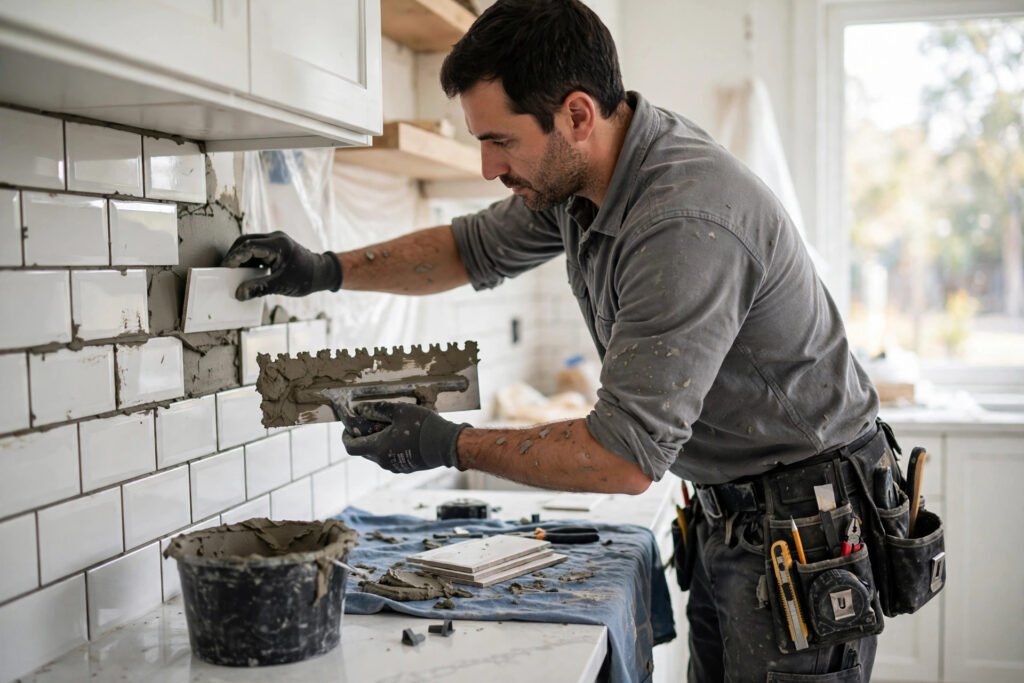
The Short Answer: Average Backsplash Tile Installation Cost in NJ
Most NJ kitchens have 30 to 40 square feet of backsplash: the wall area between the countertop and the upper cabinets, plus the stretch behind the range. At 2026 installed rates, that works out to:
- Budget (basic ceramic or subway tile): $800 to $1,400
- Mid-range (porcelain, standard layouts): $1,400 to $2,400
- Premium (zellige, natural stone, full-height areas): $2,400 to $4,500 or more
Per square foot, expect $25 to $65 installed for most tile types. And here is the part that surprises people: labor is usually 60 to 70 percent of the total. The tile itself is often the smaller line item. A cheap tile installed badly costs more over time than a mid-range tile set by a proper tile crew, because a failed backsplash means paying for demo and a redo on top of the original job.
Backsplash Tile Cost Per Square Foot in 2026
Prices below are installed (materials plus professional labor) for a straightforward backsplash with no major wall repair, based on northern and central New Jersey rates in 2026.
| Tile type | Material per sq ft | Installed per sq ft | Best for |
|---|---|---|---|
| Ceramic subway tile | $3 to $8 | $25 to $40 | Budget-friendly classic |
| Porcelain tile | $4 to $10 | $28 to $45 | Busy family kitchens |
| Glass mosaic | $8 to $20 | $40 to $65 | Modern accents |
| Zellige / handmade-look tile | $12 to $30 | $45 to $75 | Texture and character |
| Natural stone (marble, travertine) | $10 to $25 | $50 to $80 | High-end traditional |
| Large-format porcelain panels | $8 to $18 | $45 to $70 | Minimal grout lines |
If you have not settled on a style yet, our 2026 kitchen backsplash ideas guide walks through the looks NJ homeowners are actually choosing this year, with honest pros and cons for each one.
Tile-by-Tile Cost Breakdown
Ceramic subway tile: $25 to $40 per sq ft installed
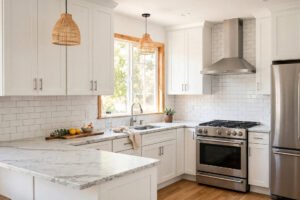
The workhorse of backsplashes. Basic ceramic subway tile costs $3 to $8 per square foot for the tile itself, and because it is uniform and easy to cut, labor stays on the low end. A 35 square foot backsplash in white subway tile with a running bond layout typically lands between $900 and $1,400 installed in NJ.
What keeps the price down is predictability: every tile is the same size, cuts are straight, and any experienced installer can lay it fast. If you want the look upgraded without the price jumping, ask for a handmade-look ceramic instead of flat ceramic. It costs a few dollars more per square foot in material but installs at nearly the same labor rate, and the glaze variation hides a multitude of sins.

Porcelain tile: $28 to $45 per sq ft installed
Porcelain is denser and harder than ceramic, which makes it tougher to cut but nearly indestructible once it is up. Material runs $4 to $10 per square foot, and the installed price lands just above ceramic. For a family kitchen in, say, a Bridgewater colonial where the backsplash takes daily abuse from kids and cooking, porcelain is the value pick: it resists stains and chips better than ceramic and never needs sealing.
Porcelain also comes in convincing stone and concrete looks now. A marble-look porcelain gives you the Carrara aesthetic at roughly half the installed cost of real marble, with zero sealing and zero staining anxiety behind the range.
Glass mosaic tile: $40 to $65 per sq ft installed
Glass tile costs $8 to $20 per square foot in material, but the labor is what pushes it up. Mosaic sheets need careful setting to keep the grout lines even, and translucent glass shows every trowel mark through the tile if the thinset is not perfect. Installers charge a premium for it, and they are right to.
Our honest take: glass works best as an accent rather than a full backsplash. A strip of glass mosaic as a focal band, or a small area behind the range, gives you the shimmer without the full-wall labor bill. Full walls of glass mosaic date faster than any other material on this list, which is worth knowing before you commit.
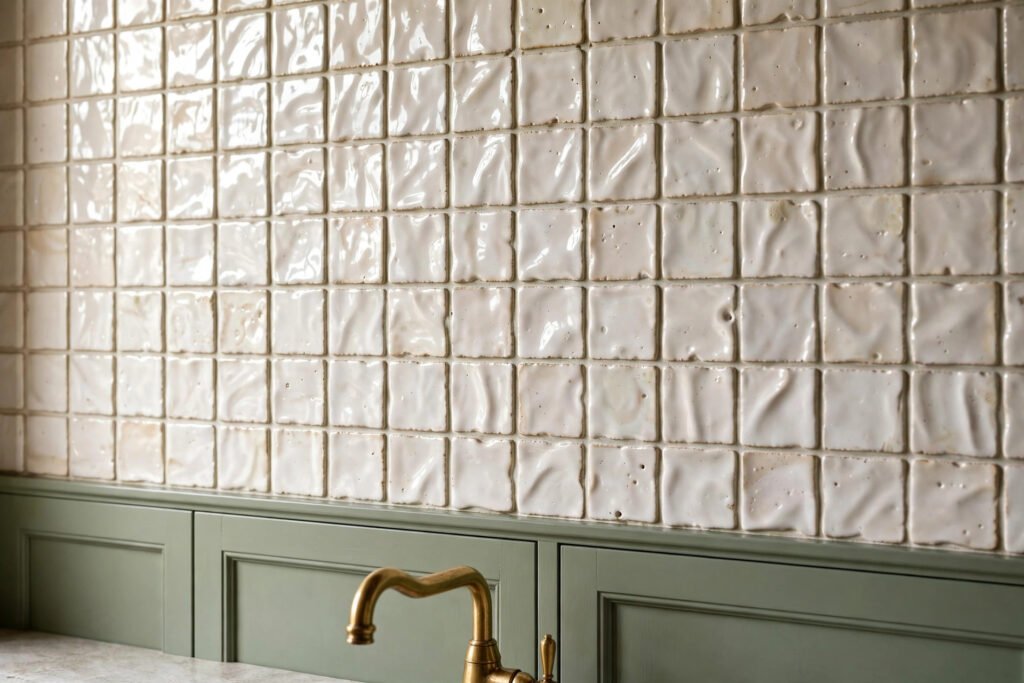
Zellige and handmade-look tile: $45 to $75 per sq ft installed
This is the 2026 trend NJ homeowners ask about most, and the price reflects the labor. Genuine zellige runs $12 to $30 per square foot for material, and every tile varies in shade, thickness, and surface. A good installer blends tiles across five or six boxes as they go, constantly stepping back to check the overall balance. That is slow, skilled work, and it is why installed zellige lands at $45 to $75 per square foot.
The handmade-look porcelain and ceramic alternatives ($6 to $14 per square foot material) capture most of the visual texture at a meaningfully lower installed price, usually $35 to $55 per square foot. If you love the zellige look but flinch at the quote, this is the compromise we suggest most often. From three feet away, even designers have to look twice.
Natural stone (marble, travertine, slate): $50 to $80 per sq ft installed
Stone tile material runs $10 to $25 per square foot, and installation is the most expensive on this list. Stone is heavy, it chips if cut carelessly, and it must be sealed at install, which adds $100 to $250 to the job. Marble behind a range also needs resealing every year or two in a kitchen that sees real cooking, or you will be looking at grease shadows that do not come out.
Stone makes sense in high-end traditional kitchens, the Short Hills and Bernardsville projects where the budget supports it and the homeowner accepts the maintenance. For everyone else, marble-look porcelain delivers the veining without the upkeep, at roughly half the price.
Large-format porcelain panels: $45 to $70 per sq ft installed
The minimal-grout look: big porcelain slabs that mimic marble or concrete with almost no grout lines. Material is reasonable at $8 to $18 per square foot, but the panels are heavy and awkward, often need two installers, and cutting them requires the right equipment. That is where the $45 to $70 installed range comes from.
This is a great choice for modern kitchens and for anyone who hates scrubbing grout. Just make sure your contractor has actually installed large-format tile before. It is a different skill from setting subway tile, and a crew learning on your kitchen is not a bargain at any price.
Labor vs. Materials: Where Your Money Goes
On a typical $1,800 backsplash job, roughly $500 to $700 goes to tile, grout, and setting materials, and $1,100 to $1,300 goes to labor. That split holds across most of our kitchen tile installation projects, and there is a good reason labor runs high.
A backsplash looks simple, but it is fiddly work. The installer cuts around a dozen outlets and switches, scribes tile to walls that are never perfectly flat in a 90-year-old colonial, keeps grout lines straight across a ten-foot run, and works around your existing cabinets and counters without scratching them. One to two full days of skilled labor is normal for 30 to 40 square feet. Quotes that come in suspiciously low are usually skipping the prep, and prep is exactly what keeps tile on the wall five years from now.
7 Factors That Raise (or Lower) Your Backsplash Quote
1. Removing the old backsplash
If there is existing tile to demo, add $300 to $800. Old tile rarely comes off cleanly. It usually takes chunks of drywall with it, which leads directly to the next cost on this list. If your kitchen still has the original 4-inch granite strip from the 2005 build, removal is quick and cheap. Full-wall old tile is the expensive one.
2. Wall condition and backer board
Tile needs a flat, solid surface to bond to. Patching torn drywall or installing cement backer board adds $200 to $600. In older Hunterdon farmhouses we often find plaster walls that need skimming before any tile goes up, and in some Essex colonials the wall behind the range bows outward enough to need furring strips. A contractor who checks the walls with a straightedge during the estimate is one you can trust.
3. Pattern complexity
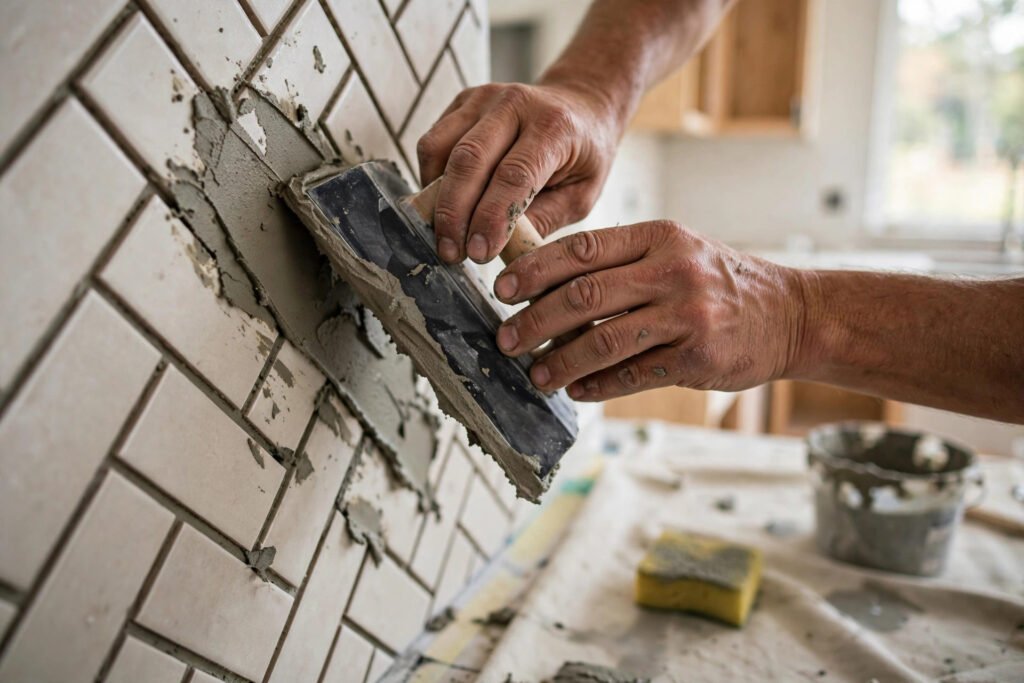
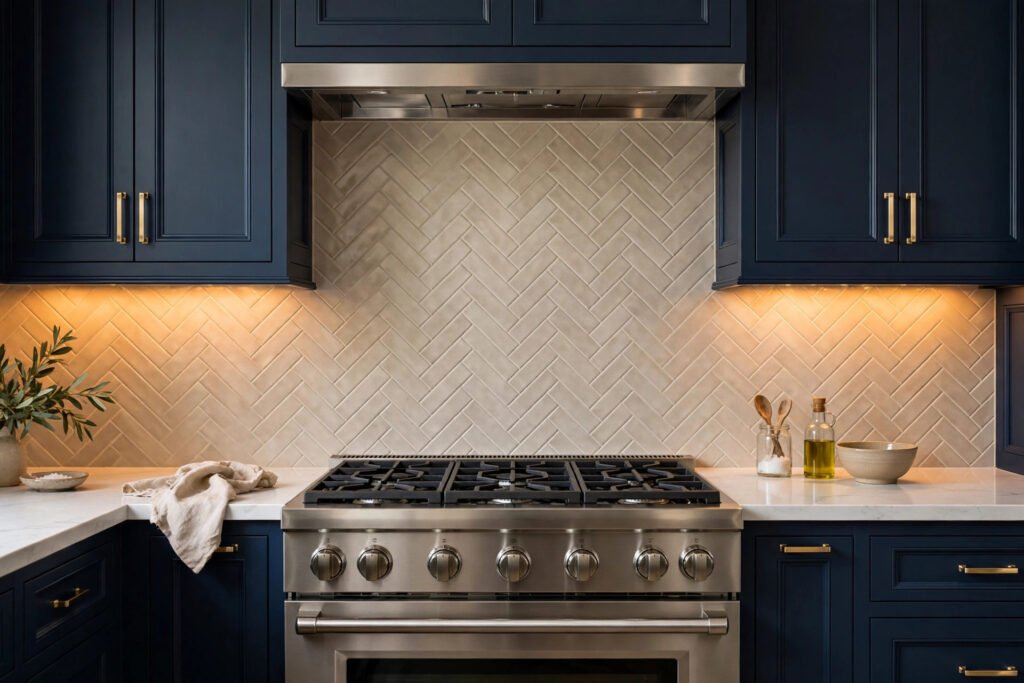
A straight stacked or running-bond layout is the baseline price. Herringbone, chevron, or basketweave adds 15 to 25 percent in labor because nearly every cut is angled and the layout takes real planning to keep the pattern centered. Small mosaics are slow for the same reason: more pieces per square foot, more chances for a crooked sheet.
4. Outlets, windows, and corners
Every obstacle is a round of measuring and cutting. A backsplash wrapping two walls with a window and six outlets costs more per square foot than one long straight run, even with identical tile. Under-cabinet lighting junction boxes and pot-filler plumbing add their share too.
5. Full-height and range walls
Taking tile to the ceiling or covering a full range wall adds square footage fast. A full-height range wall can double the tile area of the whole job, and working overhead around a range hood is slower than working at counter height. This is also where the premium tiles usually go, so the two cost drivers stack.
6. Natural stone sealing
Stone tile needs sealing at install, typically $100 to $250, and periodic resealing after that. Skip it behind a range and you will be staring at grease shadows that no cleaner removes. Factor the maintenance into your decision, not just the install quote.
7. Electrical work while the wall is open
Moving an outlet, adding a switch for under-cabinet lighting, or raising outlet boxes to sit flush with thicker tile is cheap when the wall is already open and expensive as a standalone visit. If your quote includes minor electrical, that is a feature, not padding.
Cost by Kitchen Size: Three Real NJ Examples
Square footage alone does not set the price, but these three scenarios from recent projects show how the numbers stack up:
- Small galley kitchen, 20 sq ft, ceramic subway, straight layout: $700 to $1,200. One day of labor, minimal cuts, often done while the homeowner is at work.
- Standard L-shaped kitchen, 35 sq ft, porcelain tile, running bond: $1,300 to $2,200. The most common job we do, and the sweet spot for value.
- Full-height range wall plus perimeter, 60 sq ft, zellige: $3,000 to $4,800. Two-plus days, shade blending across boxes, dozens of cuts around the hood and outlets.
The middle scenario is where most NJ homeowners land, and it is genuinely the best value: porcelain gives you durability and a high-end look for roughly half the installed price of handmade tile.
DIY vs. Hiring a Pro: Honest Math
Tiling a backsplash is one of the more DIY-friendly tile jobs, and we say that as people who do it for a living. A straight subway tile backsplash in a small area is genuinely doable for a careful homeowner over a weekend. Materials for 30 square feet of ceramic subway run $150 to $300, plus $100 to $200 in tool rentals (wet saw, trowels, spacers, snap cutter) if you do not own them.
Where DIY goes wrong is the same three places every time. First, walls that are not flat: tile follows every wave, and a wavy wall makes even perfect tile look amateur. Second, outlets and switches: miscut tiles around boxes are visible from across the room. Third, grout: rushed grouting with too much water ruins good tile work, leaving haze and weak joints. The Tile Council of North America publishes installation standards covering proper substrate prep, and most DIY failures trace back to skipping exactly that prep.
The break-even math is simple. If a pro quotes $1,600 and your DIY material plus tool cost is $400, you are trading $1,200 for 12 to 16 hours of your weekend plus the risk of a redo. For simple ceramic in a straightforward kitchen, many homeowners find that trade worth it. For zellige, natural stone, or anything above the cabinets, it rarely is.
How to Keep the Cost Down Without a Cheap-Looking Result
- Put the money tile where eyes land. Use affordable ceramic for the long perimeter runs and save the handmade tile for the range wall or a focal strip. Nobody studies the field tile; everybody looks at the focal area.
- Stick with standard layouts. Running bond or stacked costs less than herringbone and still looks sharp, especially in a handmade-look tile where the glaze texture does the talking.
- Keep outlets where they are. Moving electrical adds cost fast. Design the layout around the existing boxes instead.
- Tile during the remodel, not after. If you are already doing counters or cabinets, adding the backsplash to the same project avoids a separate mobilization charge. Our countertop and backsplash service is frequently bundled this way, and bundling also means one warranty covering the whole wall.
- Get a fixed line-item quote. A quote that breaks out demo, prep, tile, and labor protects you from the classic mid-job “we found issues” upcharge. That is how we price every project, and it is what you should expect from any contractor.
Frequently Asked Questions
How much does it cost to tile a backsplash per square foot in NJ?
Installed, $25 to $65 per square foot for most tile types in 2026. Basic ceramic subway lands at $25 to $40 per square foot installed, while zellige and natural stone run $45 to $80. Labor is typically 60 to 70 percent of the total.
How long does backsplash installation take?
One to two days for a standard 30 to 40 square foot backsplash, plus demo and wall prep if needed. Full-height walls, intricate patterns, or stone that needs sealing can stretch the job to three days.
Is it cheaper to install a backsplash during a full kitchen remodel?
Usually yes. Bundling the backsplash with counters or cabinets avoids a separate trip charge and lets the crew sequence demo, electrical, and tile efficiently. It also means a single warranty covering the whole wall instead of two contractors pointing at each other if something fails.
Do I need to remove my old backsplash tile first?
Yes, in almost every case. Tiling over old tile only works if the existing tile is perfectly flat and solidly bonded, which is rare. Budget $300 to $800 for demo, and expect some drywall repair behind it.
What is the cheapest backsplash tile that still looks good?
Basic ceramic subway tile. At $3 to $8 per square foot for material, it is the lowest-cost option that still looks intentional and clean, especially in a warm white with matching grout. It has stayed in style for a century for a reason.
Does a new backsplash add home value?
It helps a kitchen photograph and show better, which matters at resale, but a backsplash alone rarely moves an appraisal. Its real return is making the rest of the kitchen look finished. If the cabinets are dated, pair the backsplash with a cabinet refresh for a much bigger impact.
Get a Fixed Quote for Your Backsplash Project
A backsplash is a small surface with an outsized effect on how your kitchen looks and feels, and it is one of the most affordable upgrades you can make with professional installation behind it. If you are in Essex, Somerset, or Hunterdon County, contact us for a free in-home estimate, including a free 3D design consultation so you can see the tile in your actual kitchen before anything is ordered. Browse our full kitchen remodeling services or find more ideas on the blog.