
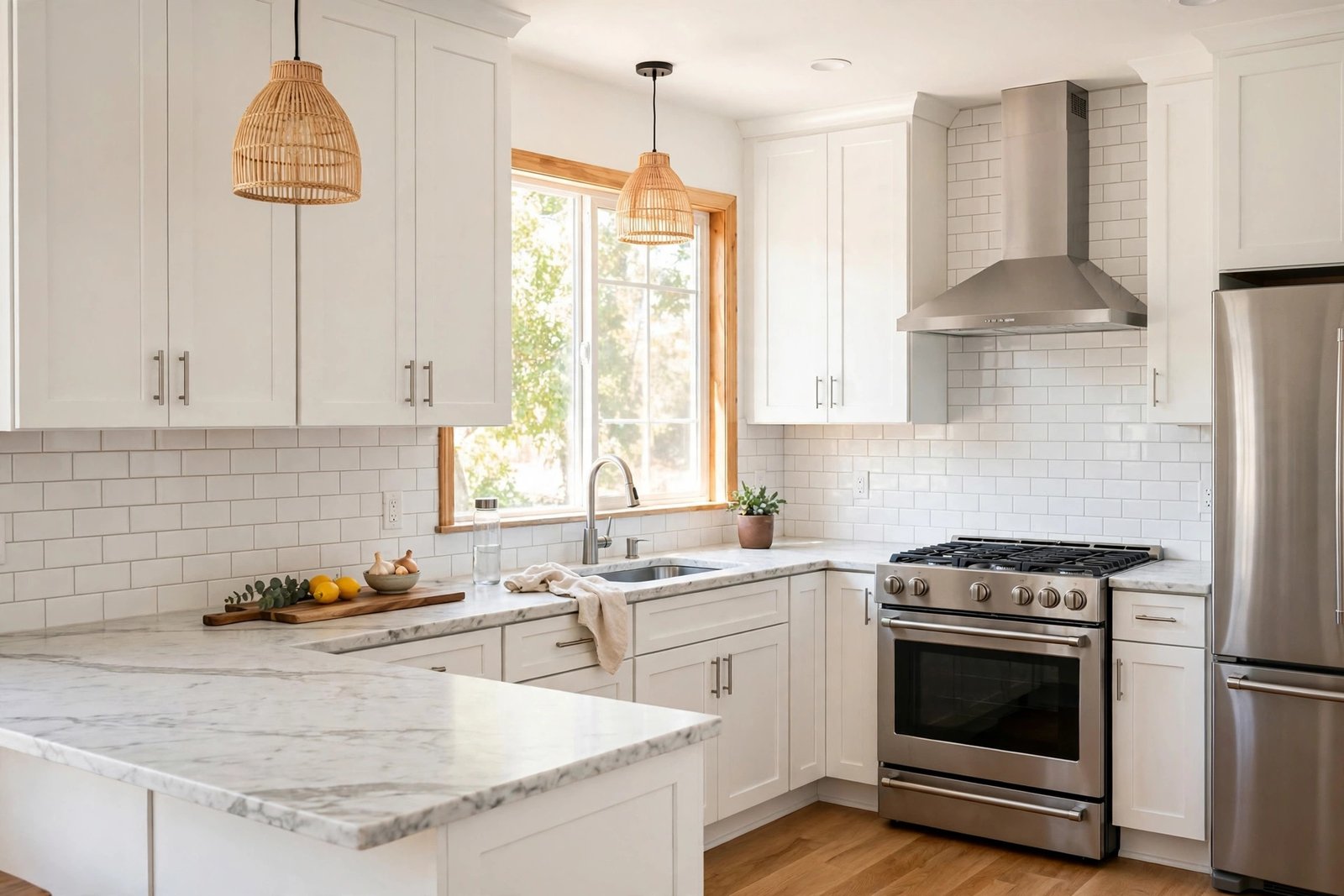
Painting vs Replacing Kitchen Cabinets: Which Is Actually Worth It?
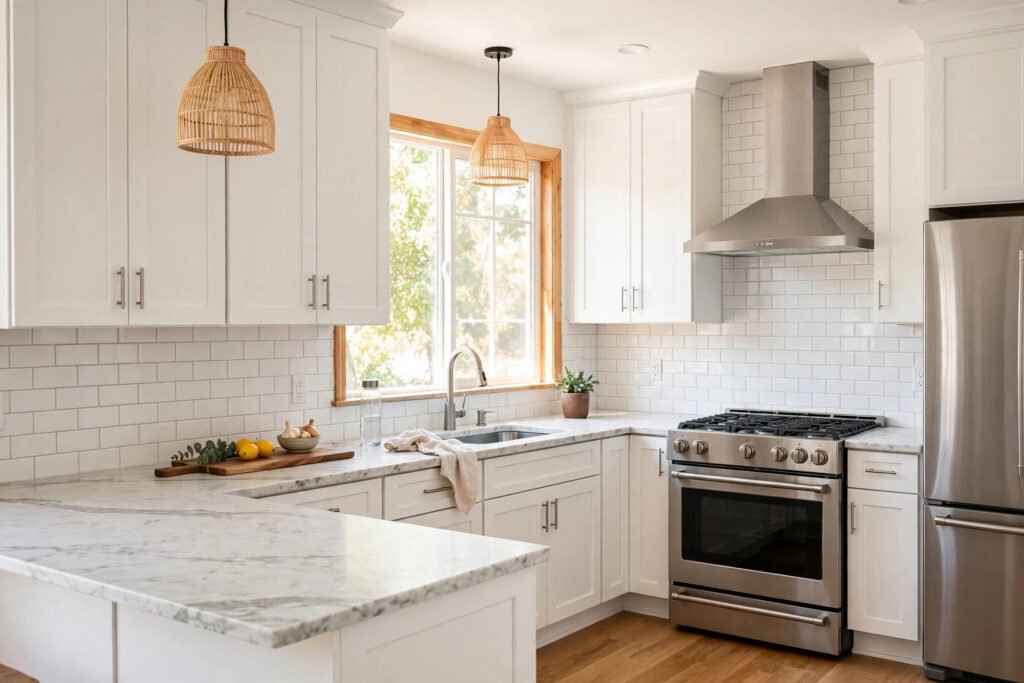
If you are asking yourself “should I paint or replace my kitchen cabinets,” you are not alone. It is one of the first questions I hear when I walk into a home in Maplewood, Bridgewater, or Flemington and the homeowner points at the kitchen and says, “I cannot stand looking at these anymore.”
The truth is, there is no single right answer. The right answer depends on the condition of your cabinets, your budget, and how long you plan to stay in the home. In this guide I will lay out the real costs in New Jersey, when painting is the smart move, when replacement is unavoidable, and what a professional job actually looks like from start to finish. By the end you will know exactly which path makes sense for your kitchen.
The Real Cost Comparison: Paint vs. Reface vs. Replace
Let us talk numbers first, because that is what most people really want to know. Prices below are realistic ranges for our service area in Essex, Somerset, and Hunterdon counties as of 2026. Labor costs in New Jersey run higher than the national average, so a blog quoting Midwest prices will mislead you.
| Option | Typical NJ Price Range | Timeline | Lifespan |
|---|---|---|---|
| Professional cabinet painting | $3,500 to $8,000 | 4 to 7 days | 8 to 10 years |
| Cabinet refacing | $8,000 to $15,000 | 1 to 2 weeks | 15 to 20 years |
| Full cabinet replacement (semi-custom) | $15,000 to $30,000+ | 3 to 5 weeks | 25 to 50 years |
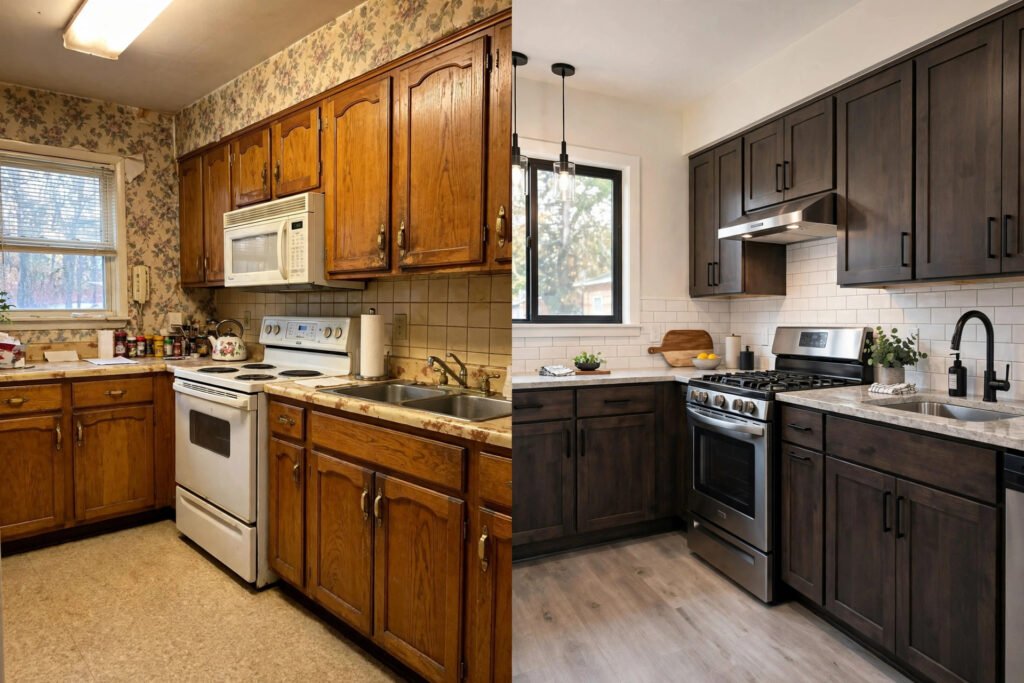
Where you land inside those ranges depends on the size of your kitchen. A galley kitchen in a Cape Cod in Somerville will come in at the low end. A large L-shaped kitchen with an island in a colonial in Short Hills will push toward the top.
Painting is by far the cheapest option. For roughly a fifth of the cost of new cabinets, you get a kitchen that looks brand new. But cheap only helps if the cabinets are worth keeping. That is what the rest of this guide is about.
When Painting Is the Smart Move
Painting makes sense when the bones of your cabinets are good. Here is the checklist I run through on every estimate.
- The boxes are solid. Plywood or solid wood cabinet boxes that are structurally sound are perfect candidates. If they are still square and the shelves sit level, paint away.
- The doors and drawers work. Hinges close, drawers slide, nothing is hanging crooked. Minor hinge issues can be fixed, but if every drawer sticks, that is a different conversation.
- You like the layout. Painting does not move walls or add storage. If you are happy with where everything is, paint is the fastest transformation available.
- The wood is paintable. Most oak, maple, birch, and even laminate or thermofoil cabinets can be painted with the right prep. Stained 1990s honey oak, which fills half the kitchens in New Jersey split-levels, takes paint beautifully once it is prepped correctly.
- You want the biggest visual change for the smallest budget. A dark, dated kitchen painted in a warm white or a deep green feels like a full remodel at a fraction of the cost.
One more scenario where painting wins: you are selling within a year or two. Fresh painted cabinets photograph well, appeal to buyers, and cost far less than new cabinets you will never enjoy. I have had realtors in Westfield tell me a freshly painted kitchen is one of the best returns on a small pre-listing budget.
When Replacement Is Unavoidable
Now the flip side. Some cabinets are past saving, and painting them is just putting lipstick on a problem. Here is when I tell homeowners to skip the paint and invest in new cabinets.
Water Damage
Check under your sink. If the cabinet floor is swollen, soft, or flaking apart from years of small leaks, that damage will show through paint and keep getting worse. Particleboard cabinets, which are common in builder-grade kitchens from the 1980s and 90s, absorb water like a sponge and never recover.
Warping, Delamination, or Peeling Veneer
Doors that have warped so badly they no longer sit flat against the frame will not magically straighten with a coat of paint. Thermofoil doors that are peeling away from the substrate at the edges or around the stove (heat damage) cannot be painted reliably. The foil keeps lifting and the paint goes with it.
A Layout That Does Not Work
Paint cannot fix a kitchen where the refrigerator blocks the oven door, where there is no counter space next to the sink, or where a family of five shares twelve linear feet of storage. If your kitchen fights you every day, the layout is the problem and only a redesign solves it. This is the most common reason homeowners in older colonials in Montclair and Maplewood end up replacing. The cabinets might be fine, but the kitchen was designed for a different era.
Lead Paint on Very Old Cabinets
Homes built before 1978 may have cabinets finished with lead-based paint. In New Jersey, disturbing lead paint triggers EPA RRP (Renovation, Repair, and Painting) rules, which require certified contractors, containment, and specialized cleanup. Sometimes it is simpler and safer to replace than to navigate a lead abatement project. If your cabinets are original to a 1950s or 60s home and have thick, alligatored layers of old paint, get them tested before anyone sands them.
You Want a Fundamentally Different Look or Function
Paint changes color. It does not add soft-close drawers, pull-out pantry storage, a taller pantry cabinet, or a range hood where a microwave used to be. If you are dreaming of features your current boxes cannot offer, replacement is the honest answer.
Pros and Cons, Side by Side
Painting Cabinets
Pros:
- Lowest cost by a wide margin, typically $3,500 to $8,000 in New Jersey.
- Fast. Most kitchens are done in under a week.
- Minimal disruption. You keep using most of your kitchen during the project.
- Endless color options, including the two-tone looks that are popular right now.
- Eco-friendly. Keeping your cabinets out of a landfill is a real plus.
Cons:
- Does not fix structural problems or bad layout.
- Shows wear faster than factory finishes, especially around handles and the stove. Touch-ups are normal over the years.
- DIY or cut-rate paint jobs chip and peel. The result depends entirely on prep and products, which is why professional work costs what it does.
Replacing Cabinets
Pros:
- Brand new boxes, doors, and hardware with factory warranties.
- You can change the layout, add storage, and choose modern features like soft-close drawers and pull-out shelves.
- Highest home value impact and the longest lifespan, 25 years or more.
Cons:
- Highest cost, $15,000 to $30,000 or more in New Jersey.
- Longest timeline, often 3 to 5 weeks of disruption.
- May require permits depending on your town and the scope of work. Many New Jersey municipalities require permits when plumbing or electrical moves, so a layout change adds paperwork and inspections.
The Middle Path: Refacing
Refacing deserves a mention because it sits between the two. Your cabinet boxes stay, but they get new veneer, new doors, new drawer fronts, and new hardware. It costs roughly $8,000 to $15,000 in our area. Refacing works when the boxes are solid and the layout is fine, but the doors are too dated or damaged to paint. Learn more about our cabinet refacing services.
What a Professional Cabinet Painting Job Actually Involves
The difference between a $1,500 brush job and a $6,000 professional spray finish is everything you cannot see in the final photo. Here is what the process should look like.
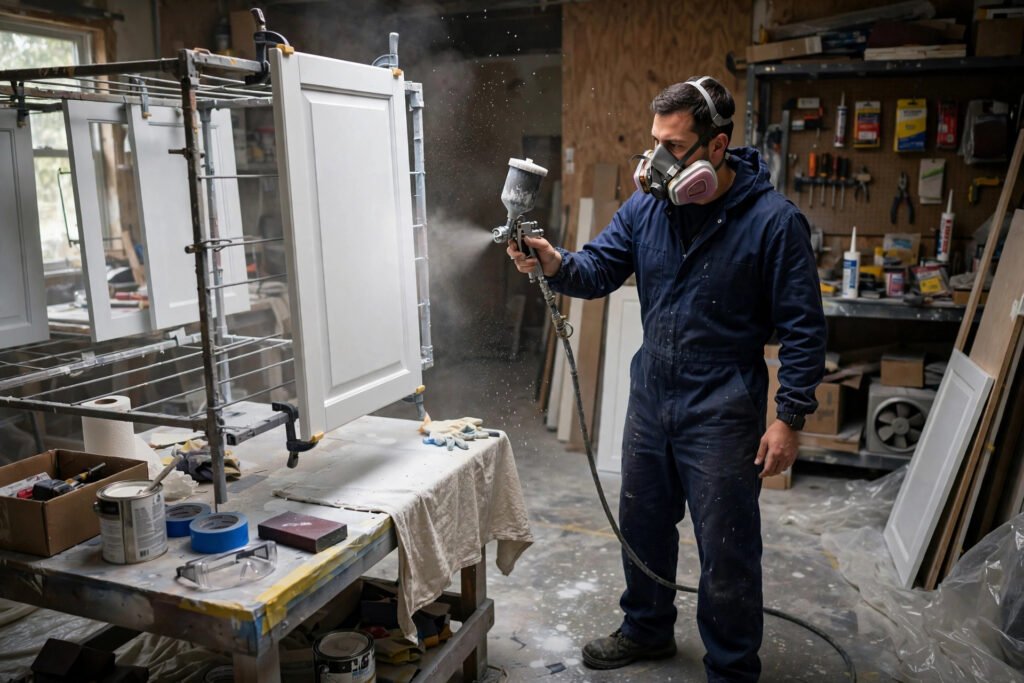
1. Removal and Labeling
Every door, drawer front, and piece of hardware comes off. Each one is labeled so it goes back in exactly the right spot. This sounds small. It matters enormously, because cabinet doors are not interchangeable.
2. Deep Cleaning and Degreasing
Kitchen cabinets collect years of cooking grease, especially above and beside the range. Professionals use a degreaser and sometimes a solvent wipe to strip every trace. Paint will not bond to grease. Skipping this step is the number one reason cheap paint jobs peel within a year.
3. Sanding and Repair
Surfaces get scuff-sanded to give the primer something to grip. Grain can be filled for a smooth finish on oak. Dents, dings, and old hardware holes get filled and sanded flush.
4. Masking and Containment
Your counters, floors, appliances, and walls get masked off. If doors are sprayed on-site, the kitchen becomes a spray booth with plastic sheeting. Many pros, ourselves included, spray doors and drawer fronts off-site in a shop for the smoothest finish and the least disruption in your home.
5. Primer
A high-adhesion bonding primer goes on first, usually two coats on bare or stained wood. This is what locks in stains and tannins from oak so they do not bleed through the topcoat months later.
6. Spray Finish
The topcoat is a cabinet-grade enamel, often a product like Benjamin Moore Advance or a catalyzed lacquer, applied with a fine-finish sprayer. Spraying lays the paint down flat, with no brush marks and no roller texture. Two to three coats is standard, sanded lightly between coats.
7. Curing Time
This is the step homeowners underestimate. Paint feels dry to the touch in hours, but cabinet enamels take 7 to 30 days to fully cure and harden, depending on the product. Your painter should tell you exactly when it is safe to put everything back and when the finish reaches full hardness. Be gentle with new finishes for the first few weeks. No slamming drawers.
If a quote does not include most of these steps, ask why. A proper job takes 4 to 7 days in your home plus shop time. Anyone promising a one-day cabinet paint job is cutting corners you will pay for later. See how we handle professional cabinet painting and finishing.
Paint Color Choices and ROI Before Selling
Color is where personality meets resale math. If this is your forever kitchen, pick what you love. If you might sell in the next few years, lean toward what buyers love.
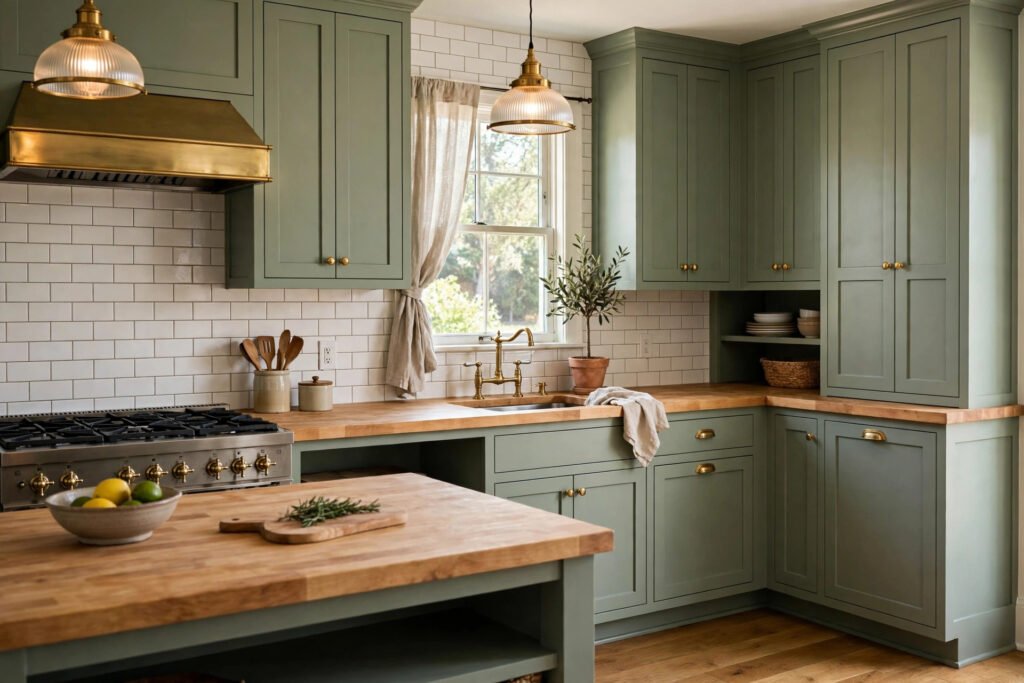
Whites and warm off-whites remain the safest choice for resale in New Jersey. They brighten the smaller kitchens common in Cape Cods and split-levels and they photograph beautifully for listings. Greige and soft gray have staying power too.
Deep greens, navy, and black are trending hard right now, and sage green with brass hardware has become the most requested look I see in Essex County. These colors can absolutely help a listing stand out. The key is balance: a deep green island with white perimeter cabinets feels current without committing the whole kitchen to a bold color.
What to avoid before selling: bright reds, glossy black throughout, or anything that reads as a personal statement. Buyers need to picture themselves in the space, and strong colors narrow that audience.
On ROI, the math is straightforward. A professional paint job at $5,000 that makes your kitchen feel ten years newer can easily return its cost in a faster sale or a stronger offer. Real estate agents in our area routinely tell sellers that the kitchen sells the house, and freshly painted cabinets are the cheapest way to make a kitchen look current. Replacement cabinets return well too, but you are spending $20,000 or more, which only makes sense if you plan to live with them for years first.
How to Decide: A Simple Framework
Still torn? Run through these four questions in order.
- Are my cabinet boxes structurally sound? No water damage, no warping, no crumbling particleboard? If yes, keep reading. If no, you are looking at replacement.
- Do I like the layout? If the kitchen works and you just hate how it looks, paint. If the layout drives you crazy every day, no amount of paint fixes that. Replace and redesign.
- What is my budget? Under $10,000 points clearly to painting. $10,000 to $15,000 opens up refacing. Above that, replacement is on the table.
- How long am I staying? Selling in 1 to 3 years? Paint for the best return on a small investment. Staying 10-plus years? Invest in the cabinets you actually want, which often means replacement.
Most of the homeowners I meet land in one of two camps. Either their cabinets are solid and they are thrilled to hear that a few thousand dollars gets them a kitchen they love, or they already know the layout is wrong and they needed someone to confirm that paint would be a waste of money. Both are fine answers. The expensive mistake is painting cabinets that should have been replaced, or replacing cabinets that only needed paint.
Get a Straight Answer for Your Kitchen
You do not have to guess. An experienced remodeler can look at your cabinets, check for water damage and structural issues, and tell you honestly whether paint will last or whether replacement is the smarter investment.

We offer a FREE 3D design consultation for homeowners in Essex, Somerset, and Hunterdon counties. We will come to your home, assess your cabinets, show you exactly what your kitchen could look like painted or replaced with a realistic 3D rendering, and give you a fixed, transparent quote. No pressure, no obligation.
Explore our full range of kitchen remodeling services, or head back to our homepage to see recent projects across New Jersey.
For industry standards on kitchen design and remodeling best practices, the National Kitchen and Bath Association is a great resource. And if you are curious about the cabinet-grade paints professionals trust, browse Benjamin Moore’s line of cabinet enamels.
Frequently Asked Questions
How long do painted kitchen cabinets last?
A professional spray finish with proper prep typically lasts 8 to 10 years in a normal household kitchen. High-traffic areas around handles and the stove may need touch-ups sooner. DIY brush jobs with regular wall paint often start chipping within 1 to 2 years, which is why the prep and products matter more than the color you choose.
Is it cheaper to paint or replace kitchen cabinets?
Painting is far cheaper. In New Jersey, professional cabinet painting runs $3,500 to $8,000, while full cabinet replacement typically costs $15,000 to $30,000 or more. Painting gives you the biggest visual transformation per dollar, as long as your existing cabinets are structurally sound.
Can you paint over oak cabinets?
Yes, and it is one of the most common projects we do. Dated honey oak cabinets, which are everywhere in New Jersey split-levels and colonials, take paint very well with proper degreasing, sanding, grain filling, and a bonding primer. The key is filling the open grain if you want a smooth, modern finish rather than visible wood texture showing through.
Does painting kitchen cabinets hurt resale value?
Professionally painted cabinets in a neutral color generally help resale value, especially if the old finish was dated. A fresh, clean kitchen photographs well and appeals to buyers. What hurts value is a sloppy DIY job with brush marks and chipping paint, or a very bold color choice right before listing. Stick with whites, greiges, or soft greens if you are selling soon.
Should I replace my cabinets if I am remodeling the whole kitchen?
If the remodel involves moving plumbing, electrical, or walls, replacing the cabinets usually makes sense since the kitchen is already torn apart and you can fix the layout at the same time. If the remodel is cosmetic (new counters, backsplash, and appliances) and the boxes are solid, painting the cabinets and putting the savings toward stone countertops is often the smarter play.
Do I need a permit to replace kitchen cabinets in New Jersey?
It depends on your town and the scope of work. Simply swapping cabinets in the same layout usually does not require a permit in most NJ municipalities. But if the project moves plumbing or electrical, or involves structural changes, permits and inspections are typically required. Your contractor should know your town’s rules and handle the paperwork.