

If you are searching for the best flooring for kitchen projects in New Jersey, you have probably already fallen down the rabbit hole. Tile people say tile. Wood people say wood. Your neighbor swears by her vinyl plank, and your brother-in-law says nothing beats real hardwood. Everyone sounds confident, and everyone contradicts everyone else.
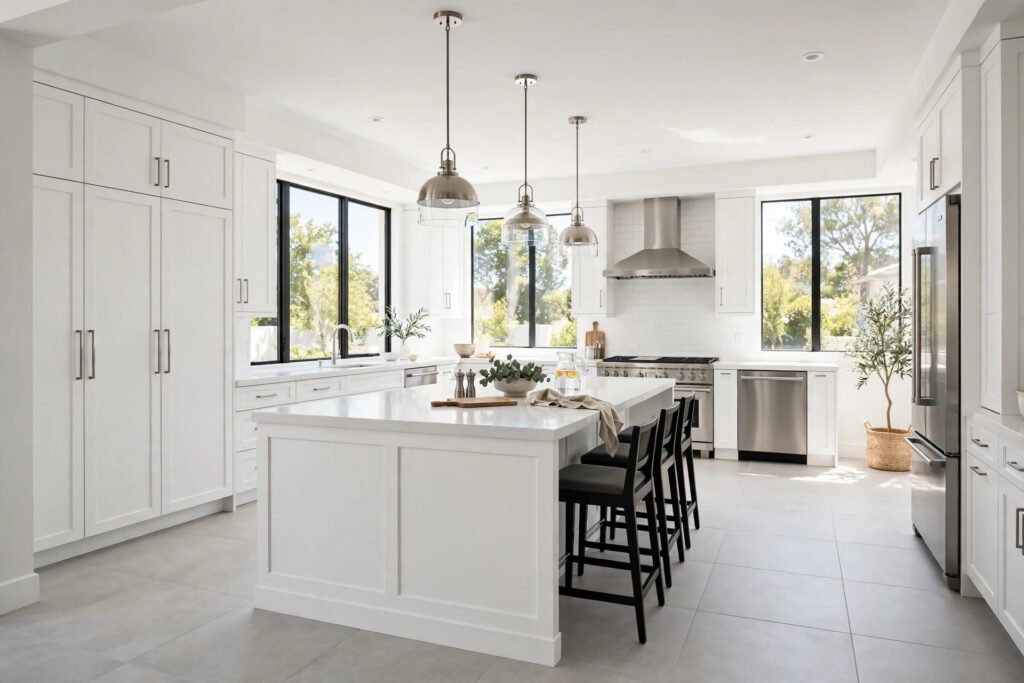
Here is the honest truth from someone who has installed kitchen floors in hundreds of homes across Essex, Somerset, and Hunterdon counties: there is no single best kitchen floor. There is only the best floor for your house, your budget, and the way your family actually lives. A retired couple in a Mendham colonial needs something different from a family with two dogs and three kids in a Bridgewater two-story.
In this guide: the six flooring options worth considering in 2026, real installed prices here in New Jersey, and where each one shines or quietly disappoints. By the end, you will walk into any showroom knowing exactly what to ask.
What Actually Matters in a Kitchen Floor
Kitchens punish floors like no other room. Before you fall in love with a sample board, judge every option against the five things that decide whether you will still be happy with it in ten years.
- Water resistance. Sinks splash, dishwashers leak, and ice cubes melt under the fridge. A floor that cannot handle standing water is a floor you will replace early.
- Durability. Dropped pots, chair legs, dog nails, high heels. Your kitchen floor takes more abuse in a month than a bedroom floor takes in a year.
- Comfort underfoot. You stand in a kitchen for hours. A rock-hard floor gets old fast if you do a lot of cooking. This is the factor showroom samples never tell you about, because you only stand on them for thirty seconds.
- Maintenance. Be honest about your cleaning habits. Some floors need sealing, waxing, or babying. Others just need a mop.
- Resale value. In towns like Montclair, Maplewood, and Bernardsville, buyers notice floors. The right choice can genuinely help a sale; the wrong one can quietly hurt it.
Keep those five in mind as we go through the options. Every floor below wins on some and compromises on others.
1. Porcelain Tile: The Workhorse
If I had to pick one floor I would never worry about, it is porcelain tile. Properly installed porcelain shrugs off water, ignores stains, and outlasts almost everything else in this guide. I have pulled up forty-year-old tile that still looked fine underneath the wear layer of daily life.
Modern porcelain has come a long way from the glossy squares of the nineties. Wood-look planks fool almost everyone, large-format tiles with tight grout lines look clean and contemporary, and textured finishes add grip when wet. Pair it with radiant heat underneath, as many of our clients in Short Hills and Basking Ridge do, and the cold-floor complaint disappears.

Typical NJ installed price: $12 to $22 per square foot, depending on tile size and pattern. Intricate layouts like herringbone push labor up.
Lifespan: 25 to 50 years.
Best for: busy households, pet owners, anyone who wants to install it once and forget about it.
Watch out: it is hard underfoot and unforgiving when you drop a glass. Grout lines need sealing and occasional scrubbing, though large tiles keep grout to a minimum. Our kitchen tile installation team sets every tile floor on a properly prepared, level subfloor, because a great tile on a bad subfloor will crack no matter how much you paid for the tile.
2. Luxury Vinyl Plank (LVP): The Crowd Favorite
LVP is the floor I recommend most often, and it is not close. Ten years ago vinyl meant the sheet stuff your grandmother had. Today’s rigid-core luxury vinyl plank is waterproof, convincingly wood-like, warm underfoot, and priced where most budgets live. It is the default choice in probably half the kitchens we remodel now.
The wear layer resists scratches from pets and chair legs, planks click together over most existing floors, and a damaged plank can be replaced on its own. For a family in Flemington with a Labrador and two kids under ten, this is the floor that lets you stop worrying.
Quality varies wildly, and this is where people get burned. Look for a wear layer of at least 20 mil, a rigid SPC or WPC core, and a warranty that covers kitchen installation.
Typical NJ installed price: $7 to $14 per square foot.
Lifespan: 15 to 25 years.
Best for: families with kids and pets, budget-conscious remodels, and anyone who wants wood looks without wood worries.
Watch out: cheap LVP can dent under heavy appliances and fade in strong sun near patio doors. It also will not add resale value the way real wood does in higher-end neighborhoods, so in a million-dollar Montclair colonial I would think twice.
3. Engineered Hardwood: The Middle Ground
Engineered hardwood is real wood on top, layered over a stable plywood or composite core. You get the look, feel, and resale appeal of hardwood with much better resistance to the humidity swings that New Jersey summers and winters put a kitchen through. Solid wood expands and contracts with every season; engineered wood mostly stays put.
This is my usual recommendation for homeowners who love wood but cook hard. Most engineered floors sold today carry a water-resistant finish, and many have warranties that specifically cover kitchen installation. It refinishes too: a quality engineered floor can be sanded and refinished once or twice, which extends its life well past the first finish.
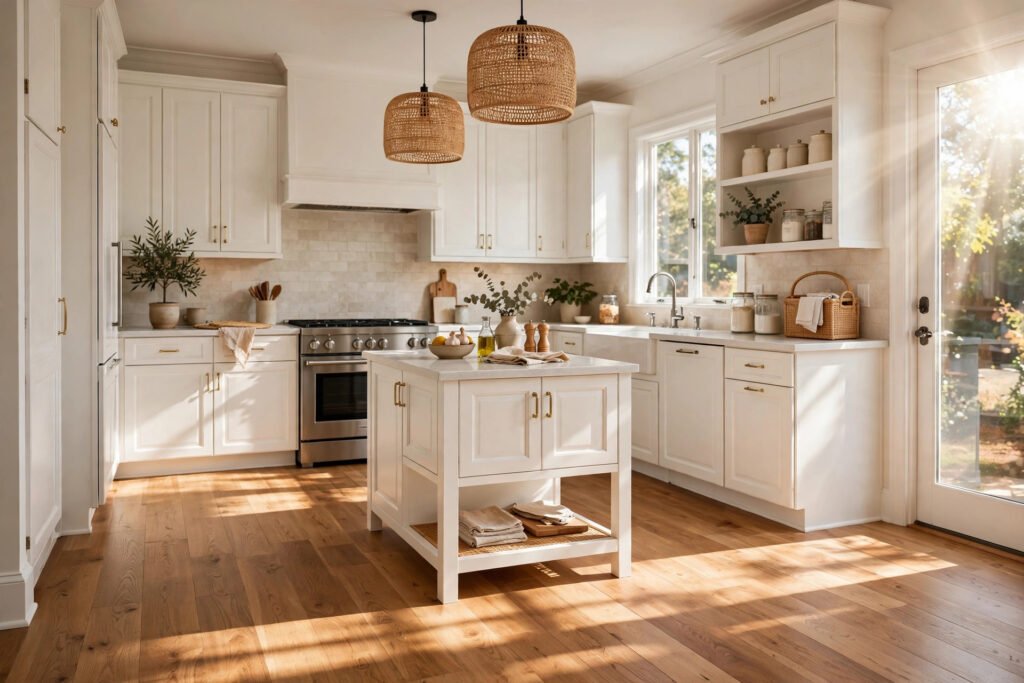
The trade-off is cost and care. Engineered wood costs more than LVP and still does not love standing water. A slow dishwasher leak that sits for a weekend can ruin planks in a way tile would laugh at. Wipe up spills promptly and it will serve you beautifully for decades.
Typical NJ installed price: $11 to $20 per square foot.
Lifespan: 20 to 40 years with refinishing.
Best for: homeowners who want real wood and strong resale value without solid wood’s moisture drama.
Watch out: the top veneer is thin on cheap products, sometimes under 2mm, which means no refinishing ever. Ask for the wear-layer thickness in writing before you buy.
4. Solid Hardwood: The Classic
Nothing looks like solid hardwood, and in older New Jersey homes it is often what is already there. I regularly walk into colonials in Westfield and Chatham where the original oak floors run straight through the kitchen, and my advice is usually the same: if the wood is sound, refinish it instead of replacing it.
Solid hardwood brings warmth, character, and the strongest resale value of anything in this guide. Buyers in Essex County will pay a premium for original or new hardwood, and a site-finished floor can be sanded and refinished four or five times, which means it can genuinely last the life of the house.
The catch is water. A leaking ice maker line, an overflowing sink, a pet bowl that sloshes daily: over years, these take a toll. That does not disqualify hardwood, but it means you need to be the kind of household that wipes up spills instead of leaving them.
Typical NJ installed price: $14 to $25 per square foot for new installation; refinishing existing floors runs $4 to $7 per square foot.
Lifespan: 50 to 100 years with refinishing.
Best for: period homes, high-end neighborhoods, and households without standing-water habits.
Watch out: seasonal gapping is normal in New Jersey’s climate and not a defect. If gaps between boards bother you, engineered wood or LVP will make you happier.
5. Natural Stone: The Statement
Slate, travertine, marble, limestone. Natural stone floors have a depth and variation that manufactured products cannot copy, and in the right kitchen they are stunning. I have installed slate in farmhouse kitchens in Hunterdon County where it looked like it had always belonged there.
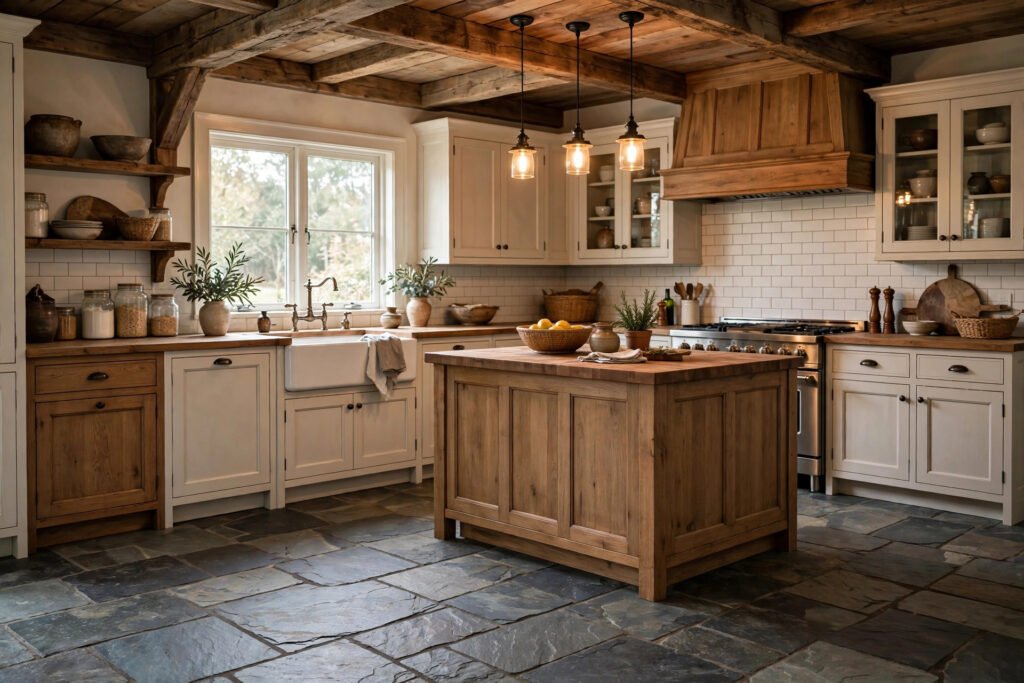
Stone is hard, heavy, and permanent, which is both its appeal and its burden. It handles water well once sealed, lasts essentially forever, and no two floors look alike. But it needs sealing on a schedule, some stones stain easily (marble and red wine are a famous feud), and it is the coldest, hardest option underfoot. It also needs a subfloor built to carry the weight, which adds to the project cost.
Typical NJ installed price: $18 to $35 per square foot, stone and complexity dependent.
Lifespan: 50+ years.
Best for: high-end and rustic-style kitchens where the floor is meant to be a design feature.
Watch out: maintenance is real. If you will not reseal on schedule, pick porcelain that mimics stone instead and save yourself the trouble and the money.
6. Laminate: The Budget Pick
Laminate has quietly improved while everyone was looking at LVP. Modern water-resistant laminate handles kitchen life far better than the laminate of twenty years ago, the visuals have gotten genuinely good, and it remains the cheapest way to get a wood look across a whole kitchen.
I recommend laminate when the budget is tight and the alternative is keeping a floor you hate for five more years. At roughly half the installed cost of engineered wood, it transforms a kitchen for very little money.
Typical NJ installed price: $6 to $11 per square foot.
Lifespan: 10 to 20 years.
Best for: tight budgets, rentals, and quick pre-sale updates.
Watch out: buy only laminate rated for wet areas, and even then treat standing water as an emergency. It cannot be refinished, so once the wear layer is gone, the floor is done.
Kitchen Flooring Cost Comparison: NJ Installed Prices
Here is the full lineup side by side, with realistic installed price ranges for our service area in 2026. “Installed” means materials, labor, underlayment, and standard subfloor prep. Tear-out, subfloor repairs, and moving appliances can add to any of these.
| Flooring Option | Installed Price (per sq ft) | Lifespan | Water Resistance |
|---|---|---|---|
| Porcelain tile | $12 to $22 | 25 to 50 years | Excellent |
| Luxury vinyl plank | $7 to $14 | 15 to 25 years | Excellent |
| Engineered hardwood | $11 to $20 | 20 to 40 years | Good |
| Solid hardwood | $14 to $25 | 50 to 100 years | Fair |
| Natural stone | $18 to $35 | 50+ years | Fair to good |
| Laminate | $6 to $11 | 10 to 20 years | Fair to good |
For a typical 200 square foot New Jersey kitchen, that puts a full floor replacement somewhere between $1,400 on the laminate end and $7,000 at the stone end, with most of our clients landing in the $2,500 to $4,500 range for LVP, tile, or engineered wood. Keep in mind these are 2026 New Jersey numbers; labor here runs noticeably higher than national averages you will see quoted online.
So Which Floor Should You Choose?
Forget the showroom for a minute and match the floor to your household. After hundreds of kitchen projects, here is how the decision usually shakes out.
Busy family with kids and pets: luxury vinyl plank. It takes the beating, cleans up fast, and you will not flinch when someone drops a pot.
Period home where resale matters: solid or engineered hardwood. In towns like Montclair and Ridgewood, buyers expect wood. If your kitchen already has original hardwood, refinishing it is the smartest money you can spend on the room.
Forever home, comfort priority: porcelain tile over radiant heat. Warm floors, zero maintenance anxiety, and a surface that outlives the cabinets.
Design-driven kitchen: natural stone or a statement porcelain. If the floor is part of the look, spend the money where your eyes land every day.
Tight budget or pre-sale refresh: quality LVP or water-resistant laminate. Spend the savings on the things buyers weight more heavily, like cabinets and countertops.
And if you are still torn between two options, order full-size samples and live with them for a week. Walk on them in socks, spill coffee on them, drag a chair across them. A sample board on your actual kitchen floor at 7 a.m. tells you more than an hour in a showroom. The National Kitchen and Bath Association also publishes kitchen planning guidelines that are worth a skim before you finalize any kitchen material decision.
Mistakes I See NJ Homeowners Make With Kitchen Floors
Most flooring regrets I get called to fix are about installation, not the material.
- Skipping subfloor prep. The number one cause of cracked tile and separating planks is an uneven or bouncy subfloor. Leveling and underlayment are boring, invisible, and non-negotiable.
- Installing the floor around the cabinets instead of under them. It saves a few boxes of material and causes headaches forever: appliance heights shift, future floor changes become demolition. Run the flooring wall to wall.
- Choosing grout color from a dry sample. Grout dries lighter than it looks wet, and kitchen grout lives a hard life. Pick a mid-tone grout, seal it, and you will thank yourself every time you mop.
- Floating a floor under a heavy island. Floating floors need room to expand. Pinning them under a 400-pound island with a stone top can cause buckling.
How Professional Kitchen Floor Installation Works
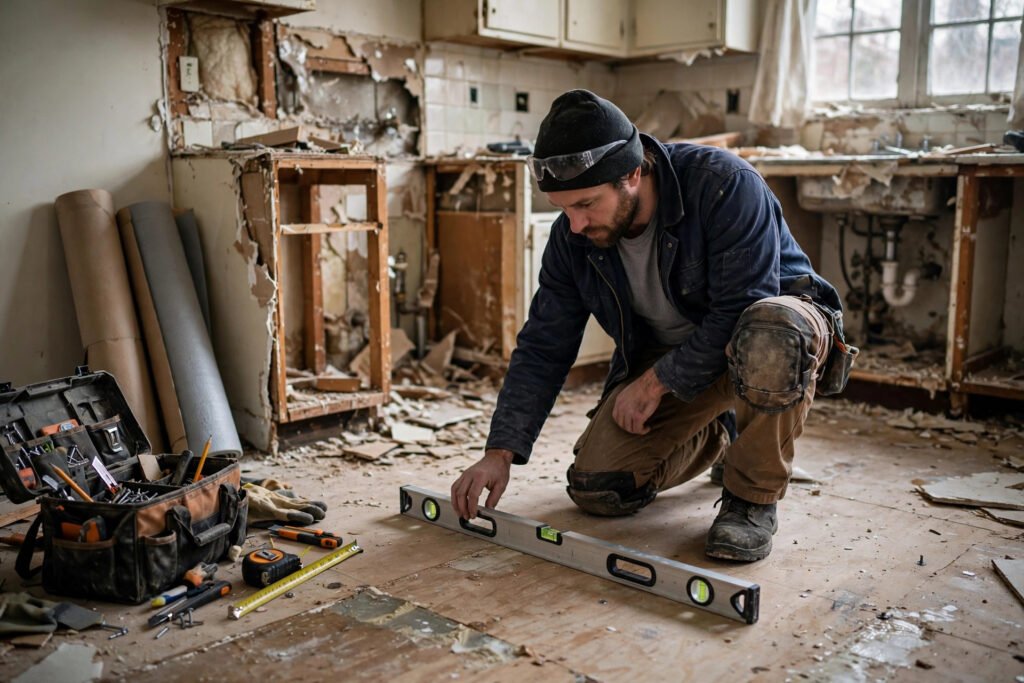
Replacing a kitchen floor usually takes two to four days. Day one is demolition and subfloor assessment: old flooring comes out, and we check for water damage, rot, or unevenness, which is extremely common in older New Jersey homes. Day two is prep: leveling, underlayment, and subfloor repairs. Then the new floor, trim, transitions, and a final walkthrough with you.
Because our kitchen flooring installers are in-house rather than day-labor subs, the same crew handles your floor from demo to final walkthrough. That continuity is why our floors do not have the callbacks that plague rushed jobs. You can read more about our full range of kitchen remodeling services if your project goes beyond flooring.
Frequently Asked Questions
What is the most durable kitchen flooring?
Porcelain tile wins on pure durability. It resists water, stains, scratches, and heat better than any other option, and a properly installed tile floor can last 50 years. Luxury vinyl plank is the runner-up, and the better pick if you also want comfort underfoot.
Can you put hardwood in a kitchen?
Yes, and thousands of New Jersey kitchens have it. Solid hardwood works if you wipe up spills promptly and keep up with the finish. Engineered hardwood is the safer wood choice for kitchens because its layered core handles humidity swings better. Households with frequent standing water should lean toward tile or LVP instead.
Is luxury vinyl plank good for kitchens?
It is one of the best kitchen floors for most families. Quality rigid-core LVP is waterproof, scratch-resistant, comfortable to stand on, and affordable. Just avoid the cheapest planks: look for a wear layer of at least 20 mil and a warranty that covers kitchen installation.
What kitchen flooring adds the most resale value?
Real hardwood, solid or engineered, adds the most resale value in the New Jersey market, especially in towns where buyers expect it. Porcelain tile in a classic style is a close second and appeals to buyers who prioritize low maintenance. LVP is resale-neutral: buyers accept it but do not pay extra for it.
How much does it cost to replace a kitchen floor in NJ?
For a typical 200 square foot kitchen, expect $1,400 to $7,000 depending on material. Most of our clients in our service area spend $2,500 to $4,500 for LVP, porcelain tile, or engineered wood, including materials, labor, and standard subfloor prep.
Can new kitchen flooring go over the old floor?
Sometimes. LVP and laminate can often float over one layer of existing flooring if it is flat, stable, and well-bonded. Tile and hardwood need a properly prepared subfloor, which usually means removing the old floor first. Always check the subfloor before deciding, because covering up a problem just postpones it.
Get a Free 3D Design Consultation
Choosing the right kitchen floor is easier when you can see it in your own space. We will come to your home anywhere in Essex, Somerset, or Hunterdon County, measure your kitchen, and show you full-size samples in a free 3D design of your actual room. No pressure, just a clear plan with transparent fixed pricing.
Schedule your free 3D design consultation today, or browse more kitchen remodeling guides on our blog while you think it over. Your feet will thank you every single day.