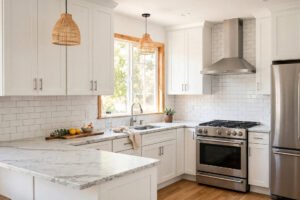
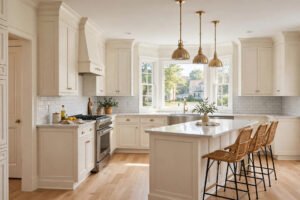

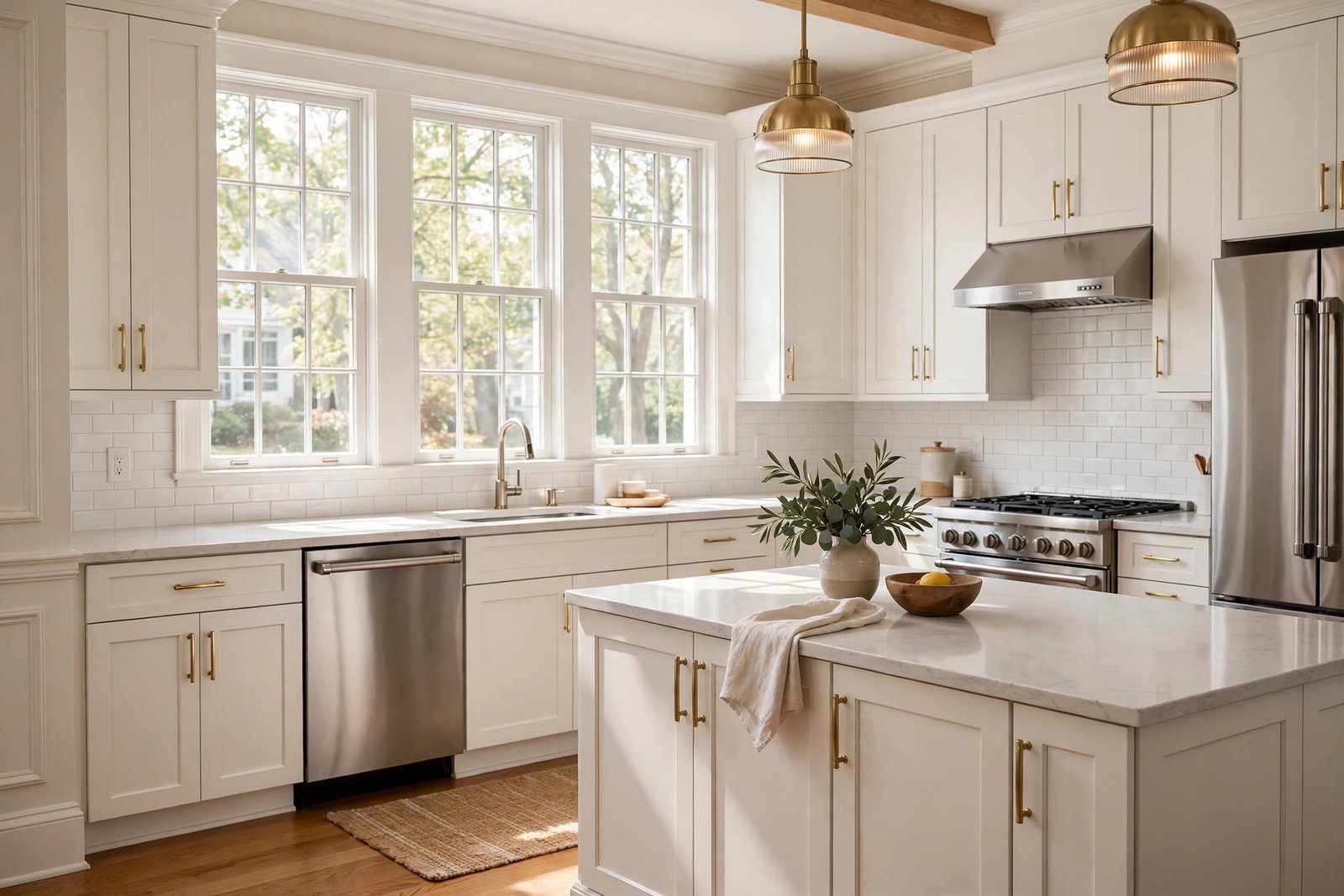
How Much Does It Cost to Reface Kitchen Cabinets in 2026?
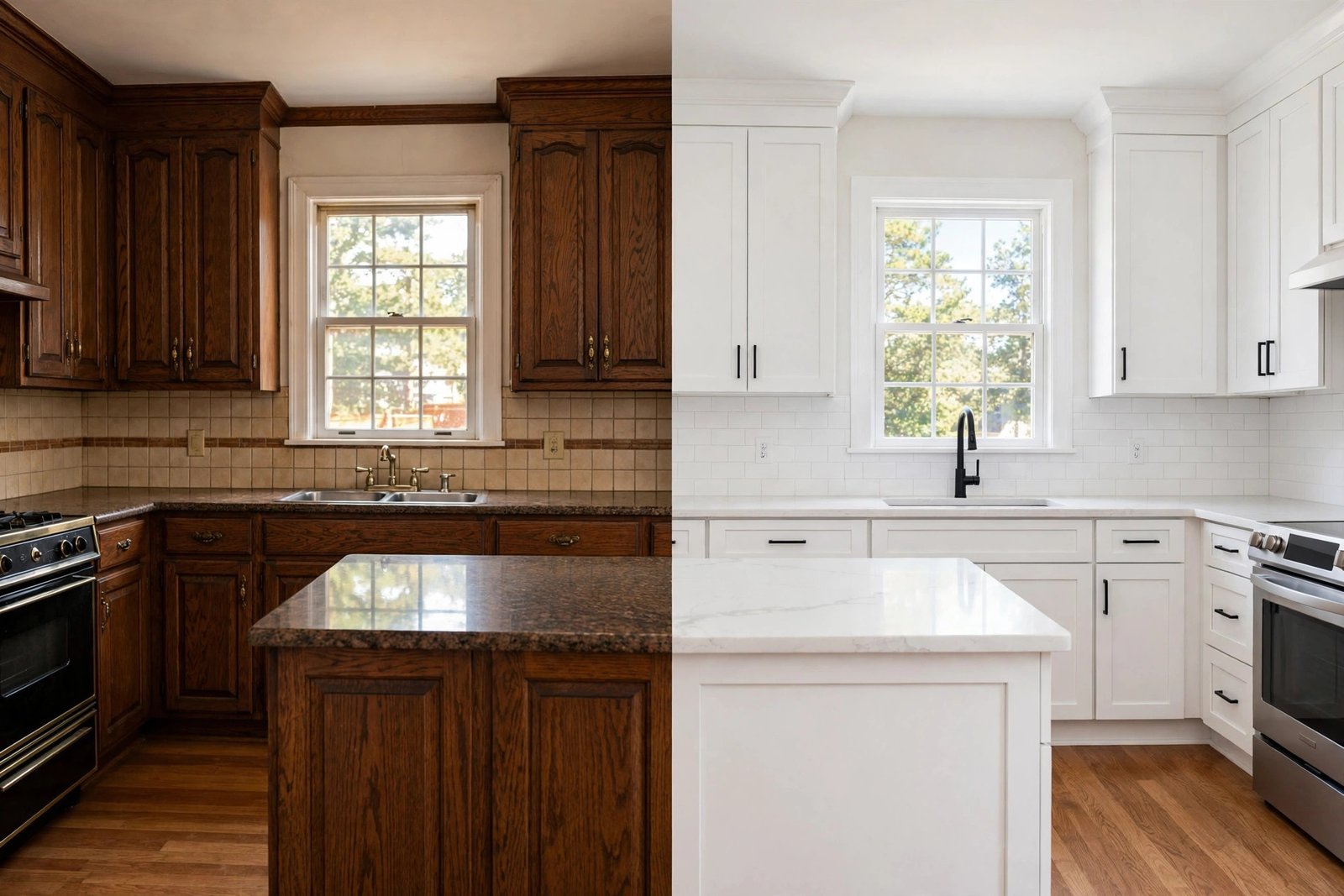
Walk into a 1980s colonial in Montclair or a split-level in Bridgewater, and you will often see the same thing: kitchen cabinet boxes that are perfectly solid, wearing doors that went out of style twenty years ago. The frames are fine. The layout works. The family just cannot stand looking at another honey-oak door.
That is exactly the homeowner cabinet refacing was invented for. And the first question everyone asks is the same one you are asking: how much does it cost to reface kitchen cabinets?
In New Jersey in 2026, most homeowners pay between $4,500 and $12,000 to professionally reface their kitchen cabinets. A small galley kitchen with laminate doors can land under $4,000. A large kitchen with solid wood doors and upgraded hardware can push past $15,000. The national average sits around $6,000 to $7,000, and northern and central New Jersey runs a little above that because skilled labor here costs more.
This guide breaks down real 2026 numbers: cost by material, per-linear-foot math you can do on your own kitchen, what drives quotes up or down, and the honest comparison against replacing or painting. By the end, you will know what your kitchen should cost and how to spot a quote that does not make sense.
The Short Answer: Cabinet Refacing Costs in 2026
Professional cabinet refacing in the United States typically costs $150 to $400 per linear foot, materials and labor included. Most full kitchens land between $4,000 and $9,500 all in. Independent 2026 cost guides put the national average project near $6,000, which lines up with what we see in the field.
A linear foot is just the combined length of your base cabinets plus your wall cabinets. Twelve feet of base cabinets and ten feet of uppers equals twenty-two linear feet. Multiply by your contractor’s per-foot rate and you have a rough budget before anyone visits your house. For a deeper dive into national numbers, this 2026 cabinet refacing cost guide tracks the same ranges.
In New Jersey, expect the upper end of those ranges. Essex, Somerset, and Hunterdon counties carry the New York metro labor premium, and the crews worth hiring stay booked weeks out. Plan on roughly 10 to 20 percent above the national average.
Compared to full cabinet replacement, refacing typically saves 30 to 60 percent. Replacing the cabinets in that same average kitchen usually runs $10,000 to $20,000 or more. Refacing gets you the new-kitchen look for roughly half the money, in about a week, without tearing your kitchen apart.
What Cabinet Refacing Actually Includes
Refacing is not painting, and it is not replacement. It sits in between, and knowing the difference explains the price.
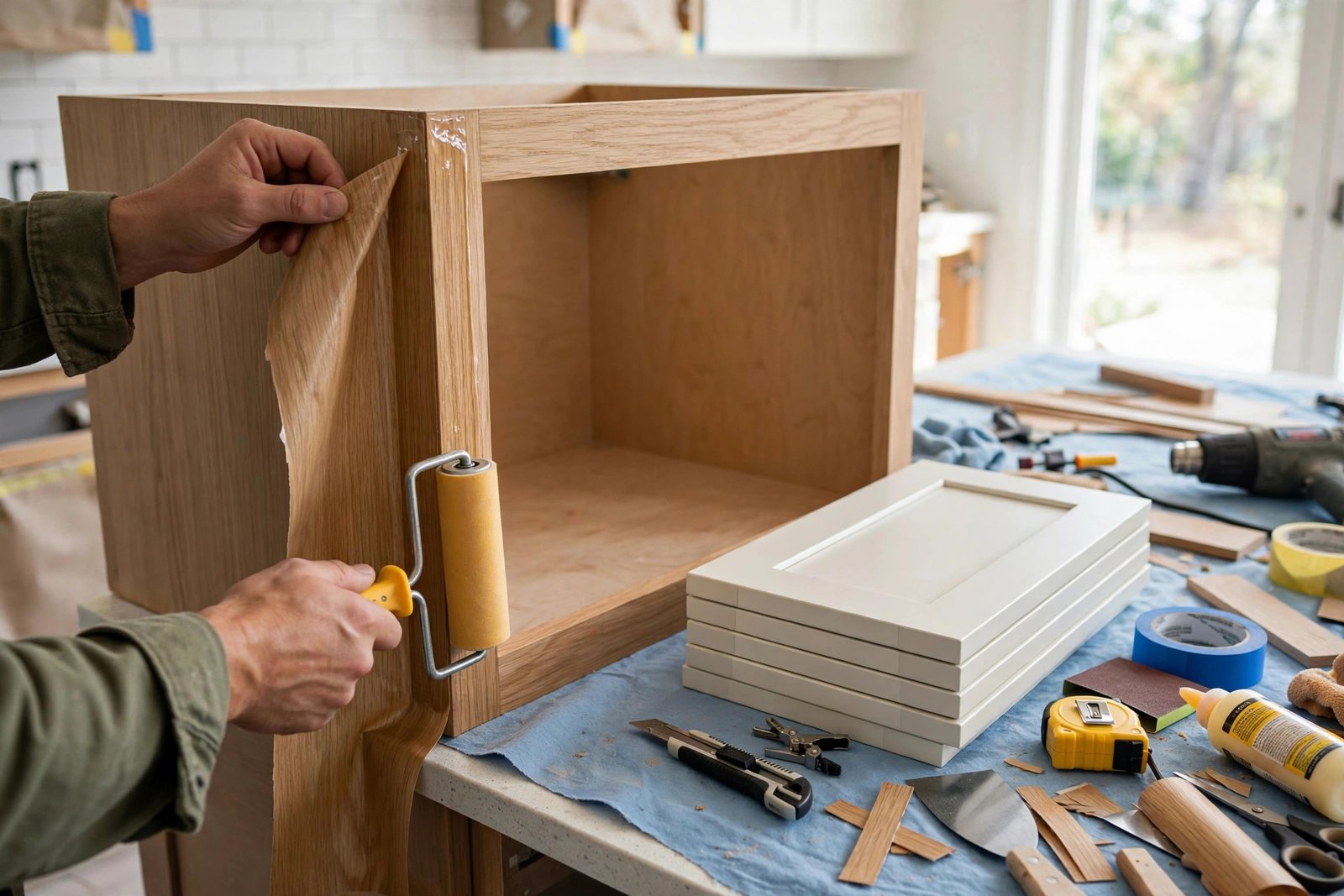
A refacing crew removes all your existing doors, drawer fronts, and hardware. The cabinet boxes stay exactly where they are. Their visible faces get covered with a matching veneer or laminate skin, then brand-new doors, drawer fronts, hinges, and pulls go on. Most homeowners add soft-close hinges at the same time, the single most appreciated upgrade in the business.
What you do not get: new boxes, a new layout, or any plumbing or electrical work. If your boxes are water-damaged or warped, refacing is the wrong move, and an honest contractor will say so. A standard job takes three to five days, and you can usually keep using parts of the kitchen while the work happens.
Cabinet Refacing Cost by Material
Material choice is the biggest lever on your final price. Here are the four options you will actually be offered, with honest 2026 pricing.
| Material | Cost per linear foot | Typical 10×10 kitchen |
|---|---|---|
| Laminate | $80 – $150 | $3,500 – $6,000 |
| Rigid thermofoil (RTF) | $100 – $175 | $4,000 – $7,000 |
| Wood veneer | $150 – $275 | $6,000 – $11,000 |
| Solid wood | $200 – $450 | $8,000 – $15,000+ |
Laminate is the budget pick, and modern laminates are far better than the peeling surfaces of the 1970s. They resist moisture, hold color well, and mimic wood grain convincingly at a distance. For a rental or a kitchen you plan to update again in a decade, it is a sensible choice. The giveaway is the edges, where you can see the seam on close inspection.
Rigid thermofoil is the vinyl-wrapped door found in most new production kitchens. It delivers a flawless, seamless surface that suits contemporary flat-panel doors. Keep it away from self-cleaning oven vents and toasters pressed hard against the doors, since extreme heat is its weakness. In a normal New Jersey kitchen, it holds up well.
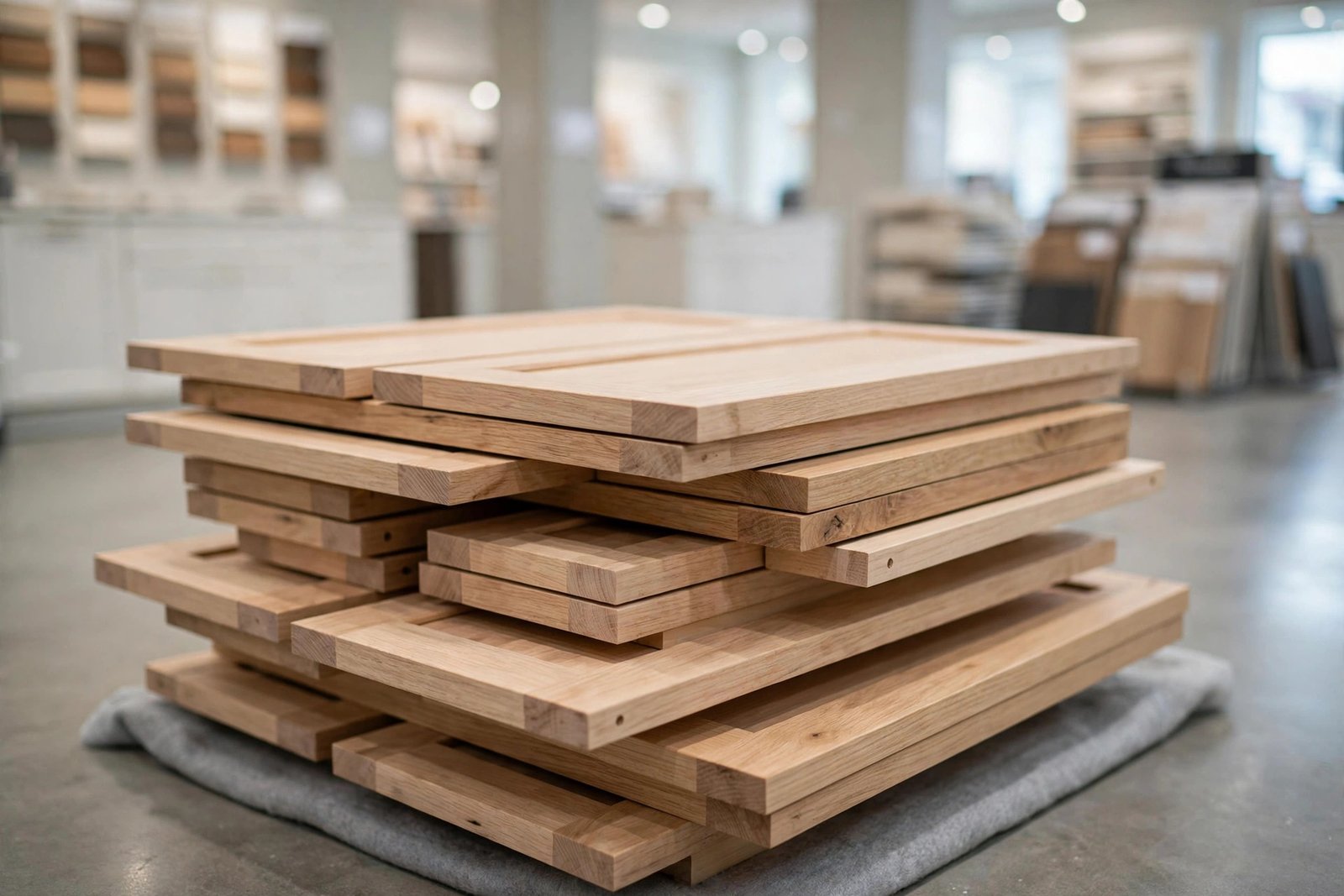
Wood veneer is the sweet spot for most of our clients: a genuine wood surface on an engineered core, at roughly half the cost of solid wood. Maple and white oak veneers are the most requested in 2026, riding the warm-wood trend. The engineered core also resists the seasonal movement that solid wood can show through New Jersey’s humid summers and dry heated winters.
Solid wood is the premium play: oak, maple, cherry, sometimes hickory. It costs the most because the material and the finishing labor cost the most. The payoff is longevity. Solid wood doors can be sanded and refinished years from now, which no other option allows. If this is your forever kitchen, the math starts to favor it.
New Jersey Pricing: What Changes the Number Here
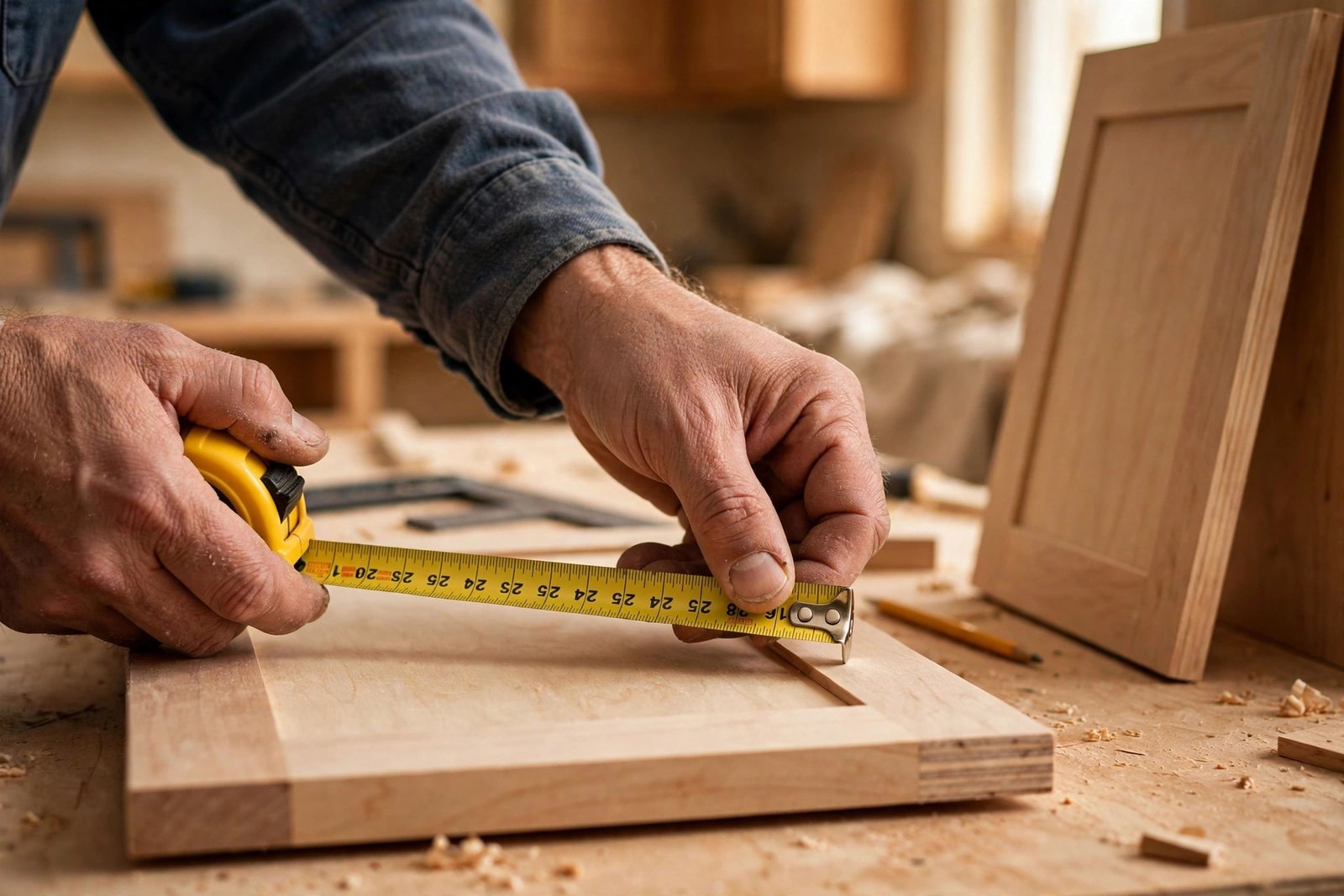
Three things push New Jersey refacing prices above the national average. First, labor: a skilled two-person refacing crew in Essex or Somerset County costs more per day than in most of the country, and labor makes up 40 to 60 percent of a refacing bill. Second, the housing stock: colonials, capes, and split-levels from 1950 to 1990 often have well-built boxes that are ideal for refacing, but older kitchens hide out-of-square boxes and layers of old paint that take time to true up. Third, timing: the spring and early-fall rush is real here, and winter bookings sometimes price a little friendlier.
One piece of good news: refacing almost never needs a building permit in New Jersey, since you are not touching structure, plumbing, or electrical. That saves both the fee and the inspection delays that slow full remodels.
What Drives Your Quote Up or Down
Two neighbors with identical kitchens can get quotes thousands apart. Here is why.
Door and drawer count. This matters more than square footage. A kitchen with 30 doors and 12 drawer fronts costs more than one with 18 doors and 8 drawers, even in same-size rooms. Drawer fronts are fiddlier, so drawer-heavy kitchens run higher.
Wood species. Maple costs less than cherry, cherry less than walnut. White oak, the darling of 2026 design, sits in the middle to upper range.
Hardware and extras. Basic knobs and pulls add a few hundred dollars. Soft-close hinges and glides add $500 to $1,500 and are worth it. Under-cabinet lighting, pull-out shelves, and lazy Susans each add a few hundred more.
Trim details. Crown molding, light rails, decorative end panels, glass inserts. Individually small line items, together $1,000 to $2,500, and they are what separates a good-looking reface from one that looks custom.
Box condition. Repairs, new drawer boxes, or heavy prep before veneering add labor. A reputable contractor finds this during the in-home visit, not mid-job.
Who does the work. National franchises tend to quote high and discount hard. Local New Jersey remodelers with in-house crews land in the middle with steadier pricing. The cheapest quote is rarely the best value on a job where finish quality is the entire point.
Refacing vs. Replacing: The Real Math
This is the decision most homeowners are actually making. Here is the honest breakdown for a typical New Jersey kitchen.
| Cabinet refacing | Full cabinet replacement | |
|---|---|---|
| Average cost | $4,500 – $12,000 | $12,000 – $25,000+ |
| Timeline | 3 – 5 days | 3 – 6 weeks |
| Kitchen disruption | Minimal | Major, often unusable for weeks |
| Layout changes | Not possible | Fully possible |
Refacing wins when your boxes are solid, you like the layout, and you want a dramatic change without the cost and chaos of a gut job. It is the right call for most New Jersey kitchens we see, because the boxes in these homes are usually better built than what you would buy today at the same price.
Replacement wins when boxes are failing, when you want to move walls or appliances, or when a full remodel already has the kitchen torn apart. There is also a middle path people forget: reface now, and put the $8,000 to $12,000 you saved toward countertops or a backsplash. A refaced kitchen with new quartz reads as brand-new to everyone who walks in. Our cabinet refacing page walks through the process we use on New Jersey homes.
Refacing vs. Painting Your Cabinets
Painting comes up in every consultation because it costs less: a professional cabinet paint job in New Jersey runs $3,000 to $8,000. Painting makes sense when your doors are already a style you like and just need a color change. A quality sprayed finish, prepped properly, looks fantastic and lasts for years.
Refacing makes sense when you want a different door style entirely, from arched 1990s oak to clean shaker, or when the existing doors are worn past what paint can hide. A factory-finished refaced door will also outlast a site-painted door in a hard-use family kitchen, because the finish is baked on under controlled conditions. Our cabinet painting and finishing service covers the painting route if you are weighing the two.
The Refacing Process: What the 3 to 5 Days Look Like
Homeowners are always surprised how undramatic refacing is. No demolition dumpster in the driveway. The typical sequence:
Day 1: teardown and prep. The crew removes every door, drawer front, and hinge, then deep-cleans and sands the exposed box frames. This prep is where quality lives. A crew that rushes sanding and degreasing will have veneer peeling in two years.
Days 2 to 3: veneer and skin. The visible box surfaces get their new skin, cut and fitted piece by piece, matched exactly to the new doors. Painstaking work, and why refacing is a skilled trade rather than a handyman job.
Days 3 to 4: doors and hardware. New doors and drawer fronts go up, hinges get adjusted so every reveal line is even, pulls are installed, soft-close mechanisms added, trim goes on.
Final day: details and cleanup. Touch-ups, caulk lines, a thorough cleaning, and a walkthrough with you.
One practical note: the doors are usually ordered weeks before the crew arrives, since custom and semi-custom doors carry a two to six week lead time. From first phone call to finished kitchen, plan on four to eight weeks, most of it just waiting on doors.
When Refacing Is Not Worth It
An honest guide needs this section. Bad boxes are the number one dealbreaker: water damage under the sink, swollen particleboard, mold, or boxes pulling from the wall. New doors on failing boxes is money wasted. Layout changes are another: refacing keeps every cabinet exactly where it is, so moving the sink or adding an island means replacement. Very low-quality original boxes also disqualify a kitchen, since veneer will not bond reliably to crumbling substrate. And if you are chasing a fully custom look with deep drawers and specialty organizers, only true custom cabinetry delivers it.
If any of these sound like your kitchen, get replacement quotes instead. Spending $9,000 refacing boxes that need replacing is worse than spending $16,000 doing it right once.
How to Get a Quote You Can Trust
It is itemized. Separate lines for doors by material, veneer work, hardware, and extras. A lump sum with no breakdown is a red flag. Our quotes use fixed line-item pricing so the approved number is the final number, and that is the standard to hold every contractor to.
It follows an in-home visit. Nobody prices refacing accurately from photos. The contractor must open the cabinets, check box condition, count doors and drawers, and measure. A phone quote is a guess.
It names the materials. Species, door style, finish, hardware brand. Vague descriptions leave room for bait-and-switch.
It includes a workmanship warranty. Look for a written warranty of at least a couple of years on labor. We back our work with a 3-year workmanship warranty, which reflects how confident a proper installation should make any contractor.
Get two or three quotes, and be suspicious of any number dramatically lower than the rest. In refacing, the cheapest bid usually means thinner veneer, rushed prep, or hardware that fails in eighteen months.
Frequently Asked Questions
How much does it cost to reface kitchen cabinets in New Jersey? Most New Jersey homeowners pay $4,500 to $12,000 for professional cabinet refacing in 2026. Laminate on a small kitchen can come in under $4,000, while solid wood doors on a large kitchen can exceed $15,000.
Is it cheaper to reface or replace kitchen cabinets? Refacing is almost always cheaper, typically saving 30 to 60 percent. A $6,000 to $7,000 refacing project compares to $12,000 to $25,000 or more for new cabinets in the same kitchen. Replacement only makes financial sense when boxes are failing or the layout is changing.
How long does cabinet refacing last? A professional job lasts 15 to 20 years or more. Solid wood doors last longest and can be refinished. The box veneer is the most vulnerable part, which is why installation prep matters so much. Ask about the workmanship warranty.
Can you reface cabinets with water damage? Minor wear is fine, but real water damage, swelling, mold, or crumbling particleboard means the boxes should be replaced, not refaced. A reputable contractor inspects the boxes during the estimate and tells you honestly.
Does refacing increase home value? Yes, within reason. Industry estimates put the return around 70 to 80 percent of project cost in added value, higher than most cosmetic updates. In competitive markets like Essex County, a dated kitchen is one of the first things buyers negotiate down, so refacing often pays for itself at the offer table.
Do I need a permit to reface kitchen cabinets in NJ? Almost never. Refacing does not alter structure, plumbing, or electrical, so municipalities do not require permits. If the project grows to include moving outlets or new plumbing, permits enter the picture.
Get an Exact Price for Your Kitchen
Online guides can only take you so far. The real number depends on your door count, your boxes, and the material you fall in love with.
That is why we offer a free 3D design consultation: we visit your home anywhere in Essex, Somerset, or Hunterdon County, measure your kitchen, inspect your cabinet boxes, and show you exactly what your refaced kitchen will look like before you spend a dollar. You get an itemized, fixed quote with no surprises and no pressure.
Contact us today to schedule your free consultation, or browse our full kitchen remodeling services to see everything we do. Your 1990s oak doors have had a good run. It is time.